




Dr Mahendralal Sircar presents a fascinating puzzle in the history of Indian science. Trained at Calcutta Medical College, he became a successful physician and one of India’s early champions of experimental science. In 1876, he founded the Indian Association for the Cultivation of Science, better known as IACS. Yet the same physician became one of the strongest advocates of homoeopathy in India.
How do we understand these two sides of the same man? Was a champion of experimental science somehow abandoning science when he embraced homoeopathy? Or did Sircar see no contradiction between questioning established medical opinion and cultivating experimental science?
The question remains relevant because homoeopathy continues to occupy an unusual position in medicine. It has a long history of clinical use and millions of users, yet some of its basic claims are difficult to reconcile with conventional scientific explanations. Supporters point to clinical experience and research. Critics point particularly to high dilutions and ask how such preparations could possibly produce biological effects. Sircar’s life therefore raises a question that is as relevant today as it was in his time. What should science do when an observation does not fit the accepted explanation?
A DOCTOR WHO CHANGED HIS MIND
Sircar came to homoeopathy after being trained in Western medicine, not before. In fact, he was initially sceptical of it. His change of mind appears to have come through a combination of reading, observation and personal experience.
Two influences were particularly important. One was Rajendralal Dutt, a prominent early advocate of homoeopathy in Calcutta, who is credited with introducing Sircar to the discipline. The other was William Morgan’s The Philosophy of Homoeopathy. Sircar did not simply accept what he was told. He studied the subject, observed its practice and eventually became persuaded by what he regarded as the evidence before him. Years later, the story of this remarkable change of mind appeared in print under the title, ‘The Story of Dr. Sircar’s Conversion to Homoeopathy’.
This makes Sircar’s change of position particularly interesting. He was not moving toward a system of medicine in which he had been trained. He was questioning the medicine in which he had already established himself professionally. His decision eventually brought him into conflict with sections of the medical establishment, but he did not retreat.

Image Courtey: Wikimedia Commons
In 1868, Sircar began editing the Calcutta Journal of Medicine. He used its pages to discuss homoeopathy and wider questions of therapeutics and wrote extensively on homoeopathic medicines and medical practice. The journal became an important platform for his views on competing approaches to medicine.
The timing is important. Sircar’s public engagement with homoeopathy began several years before he founded IACS and continued alongside his efforts to promote experimental science. For him, an interest in homoeopathy and a commitment to experimental science apparently existed side by side.
Sircar was also interested in what homoeopaths called “drug proving,” the observation of effects produced by substances. Historical accounts record that he experimented with medicines on himself and described what he observed. Such self-experimentation would obviously not meet the standards of modern biomedical research. It lacked proper controls and could not establish efficacy. But Sircar’s approach tells us something about the way he thought. He wanted therapeutic claims to be examined through observation rather than decided solely by medical authority.
We need not accept Sircar’s conclusions simply because he was Dr Mahendralal Sircar. Eminence is not evidence, after all.
What makes his story interesting is the intellectual journey itself. A physician trained in Western medicine encountered an unfamiliar claim, initially doubted it, read about it, observed it, experimented for himself and eventually changed his position. Whether his conclusion withstands modern scientific scrutiny is a separate question. His willingness to question what he already believed is what makes the story relevant today.
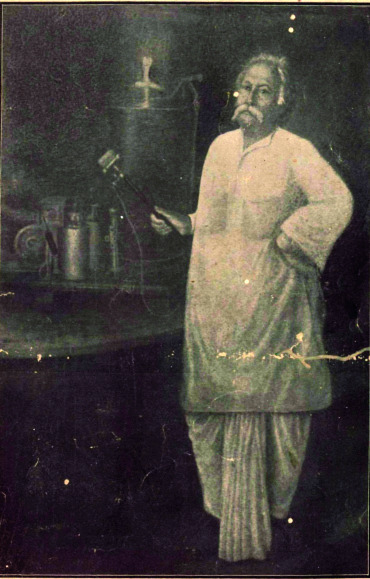
Image Courtey: Wikimedia Commons
There is another interesting connection between Sircar’s medical experience and his larger scientific mission. Historical scholarship suggests that this opposition strengthened his conviction that medicine needed freedom from orthodoxy and dogmatism. He believed that uncertainty in medicine should be addressed through scientific inquiry, dialogue and tolerance. Instead of turning away from science, he wanted more of it. That conviction eventually found its greatest institutional expression in IACS.
THE QUESTION HAS CHANGED
Sircar could examine medical questions only with the knowledge and instruments available in the nineteenth century. We have a very different opportunity today. Rather than debating whether Sircar was right or wrong, we can ask what twenty-first-century science can actually establish.
Homoeopathy presents an unusual scientific challenge because some of its medicines involve very high dilutions. At sufficiently high dilutions, the preparation may contain few or no molecules of the original substance. What, then, could account for a biological effect?
That is a perfectly reasonable scientific question. But difficulty in explaining a possible mechanism need not end the inquiry. We can begin by asking what actually happens during the preparation of highly diluted medicines. Do such preparations have measurable physical or chemical characteristics? If differences are found, can another laboratory reproduce them? Do they arise from the starting material, the method of preparation, the container, contaminants or something else? Most importantly, do these preparations produce reproducible changes in biological systems?
An unexplained observation is not evidence for the explanation we happen to prefer. At the same time, lack of an explanation is not a good reason to stop examining the observation.
The history of science repeatedly reminds us of this distinction. Observations have sometimes preceded their satisfactory explanations. But an unexplained observation is not necessarily a genuine phenomenon. It may turn out to be error, coincidence, bias or an artifact of the experiment. The first job of science is therefore to establish whether the phenomenon is real and reproducible. Only then does explaining it become meaningful.
This distinction is particularly relevant to homoeopathy. Critics reasonably ask how a highly diluted preparation could exert an effect. But the question of mechanism comes only after establishing that there is a reproducible effect to explain. A plausible mechanism cannot rescue an effect that disappears when properly tested. Conversely, lack of a known mechanism cannot, by itself, tell us whether an observed phenomenon is real.
Modern science now gives us tools that Sircar could never have imagined. Yet the research questions themselves can be remarkably simple. What is there? What does it do? Does it help the patient? The first belongs largely to analytical science, the second to experimental biology. The third is ultimately a clinical question. Evidence at one level cannot automatically answer the next.
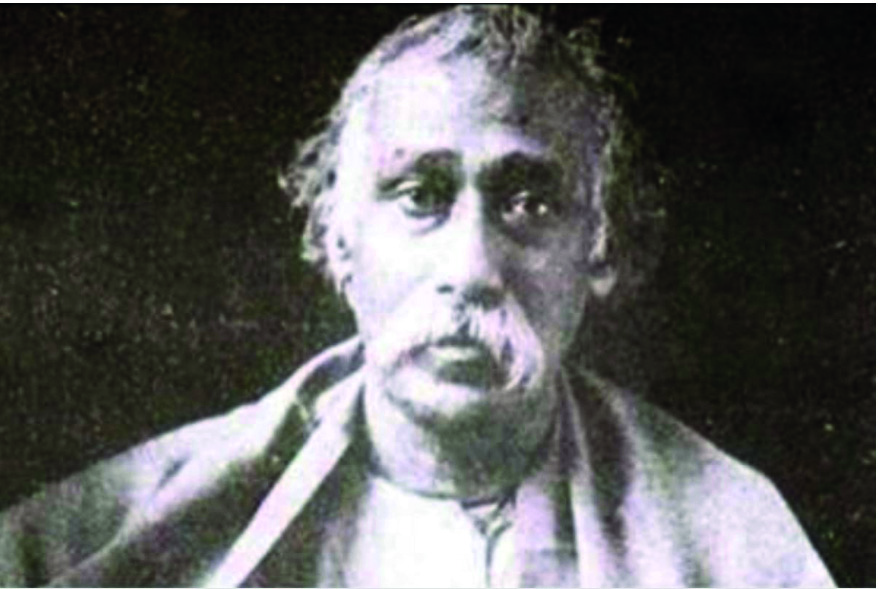
Image Courtey: Wikimedia Commons
Finding something unusual in a highly diluted preparation does not prove that it works as a medicine. An effect demonstrated in cells or animals does not prove benefit to patients. Therapeutic claims ultimately have to stand the test of properly designed clinical studies. This is why asking whether one “believes” in homoeopathy is not particularly useful. A better question is what we can measure, reproduce and verify.
INDIA CAN ASK ITS OWN QUESTIONS
India is particularly well placed to do this. We have a large network of homoeopathic practitioners, teaching institutions, hospitals and patients. More importantly, India has the scientific expertise needed to examine these questions without remaining within the boundaries of any one system of medicine.
This work has already begun. The Central Council for Research in Homoeopathy is collaborating with scientists and research institutions outside the homoeopathy system, bringing modern analytical, biological and computational approaches to questions surrounding high dilutions and their possible effects.
But sophisticated instruments alone will not settle the debate. Equally important is how the questions are framed and how the experiments are designed. Research undertaken merely to validate an existing belief is unlikely to convince anyone outside that belief system. Scientists from different disciplines should be able to examine the same claims independently. Good controls matter. Reproducibility matters. Negative findings are as much a part of science as positive ones.
The purpose of this research is simple. It should not begin with the conclusion that homoeopathy must work, or that it cannot work. It should try to find out what is true.
Some reported effects may disappear when better controls are introduced.
That is useful knowledge, not a failed experiment. Others may survive repeated testing. Those are the observations that deserve closer attention. In either case, we know more than we did before.
WHAT SCIENTIFIC TEMPER REALLY DEMANDS
We often associate scientific temper with questioning unconventional claims, and rightly so. But scientific temper asks something more of us. It requires us to be equally critical of our own certainty.
The real test is whether we are willing to frame a question that can be tested, design an experiment that gives the claim a fair chance to succeed or fail, and then live with the result.
That responsibility applies to both advocates and critics of homoeopathy. Clinical experience can generate valuable questions, but experience alone cannot settle questions of efficacy or mechanism. Reports from animal and plant studies are also worth examining because they remove conscious patient expectation from the experiment. Such studies do not establish efficacy and require particularly careful controls. Their value is that they provide questions that can be tested experimentally.
SAMUEL HAHNEMANN AND THE ORIGINS OF HOMOEOPATHY
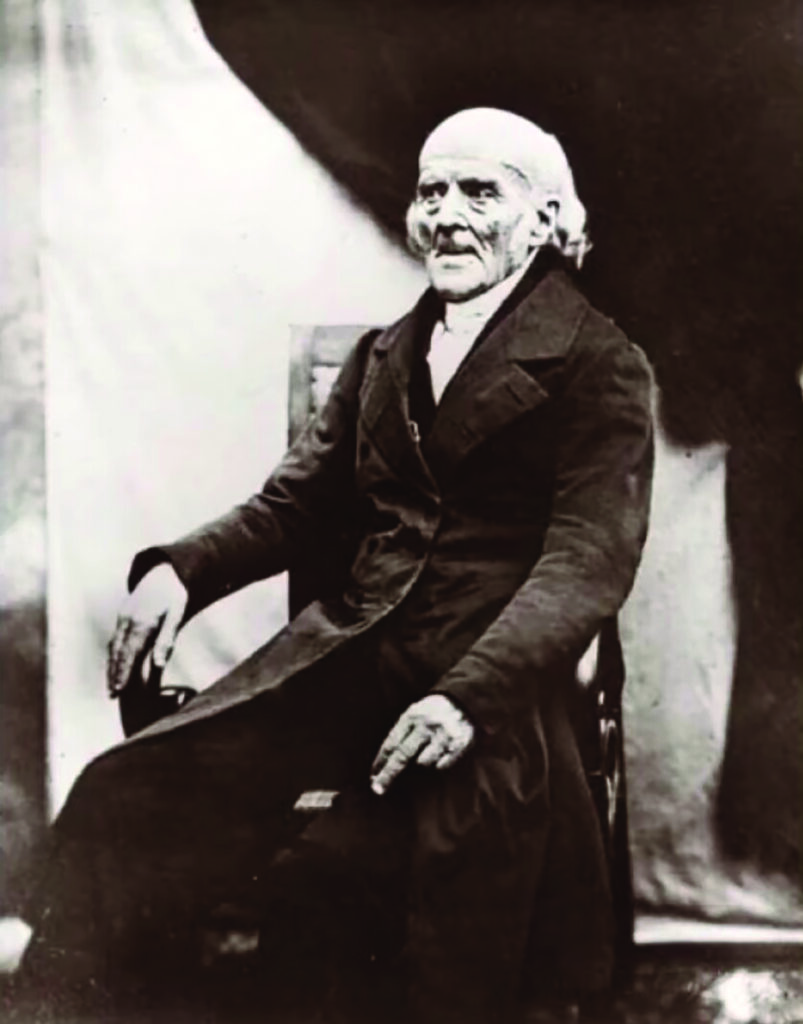
Homoeopathy began with Samuel Hahnemann (1755–1843), a German physician dissatisfied with some
medical practices of his time. In 1790, while translating a medical text, he wondered why cinchona bark worked against malaria. He took the bark himself and reported symptoms that he considered similar to malaria. This observation led him to similia similibus curentur, or ‘like cures like’.Hahnemann went on to study the effects of substances on healthy individuals, known as “drug proving”, and developed methods involving serial dilution and vigorous shaking. He presented his system in 1810 in the Organon of Medicine, the foundational text and guiding philosophy of homoeopathy. What began with a question had become a new approach
to medicine.
This is where Sircar’s story becomes more than an interesting episode in the history of Indian medicine. His larger legacy was intellectual independence. He lived under colonial rule, when scientific knowledge largely flowed from Europe to India. He wanted Indians to acquire the ability and confidence to investigate nature for themselves. IACS was the institutional expression of that ambition.
A century-and-a-half later, India does not lack scientific institutions, sophisticated instruments or scientific talent. The challenge before us is different. Do we have enough confidence in science to examine controversial questions without first deciding whether they are orthodox or unorthodox?
A mature scientific culture should be able to do that. Traditional claims must face scrutiny, but established explanations must remain open to challenge. What matters are good questions, fair experiments, transparency, reproducibility and evidence.
SIRCAR’S UNFINISHED QUESTION
There is a certain historical symmetry in asking these questions as IACS completes 150 years. The institution Sircar created because he wanted Indians to investigate nature for themselves now belongs to a country with scientific capabilities he could scarcely have imagined.
Perhaps the best tribute we can pay Dr Mahendralal Sircar is not to invoke his name in support of homoeopathy or against its critics. It is to practice the kind of scientific inquiry that he wanted India to cultivate.
Homoeopathy should not be accepted because Dr Mahendralal Sircar believed in it. Nor should it be rejected merely because some of its claims are difficult to reconcile with current scientific explanations. It should face rigorous experiments, appropriate controls, independent replication and the same standards of evidence that we expect elsewhere in science and medicine. Homoeopathy deserves neither special privilege nor special prejudice.
Some claims may survive that examination. Others may not. Science must remain prepared for both outcomes. Research does not exist to protect an idea, whether conventional or unconventional. It exists to test it.
One hundred and fifty years after Sircar founded an institution for the cultivation of science, his unfinished question remains surprisingly contemporary. When observation challenges accepted explanation, science should neither believe too quickly nor dismiss too easily. It should ask the difficult question, design the fair experiment and accept the answer, whatever that answer may be. Perhaps that is what the cultivation of science really means
*The writer is ANRF Prime Minister Professor, COEP Technological University, Pune; Former Director, Agharkar Research Institute, Pune; and Member, Research Advisory Board, Central Council for Research in Homoeopathy (CCRH), New Delhi