




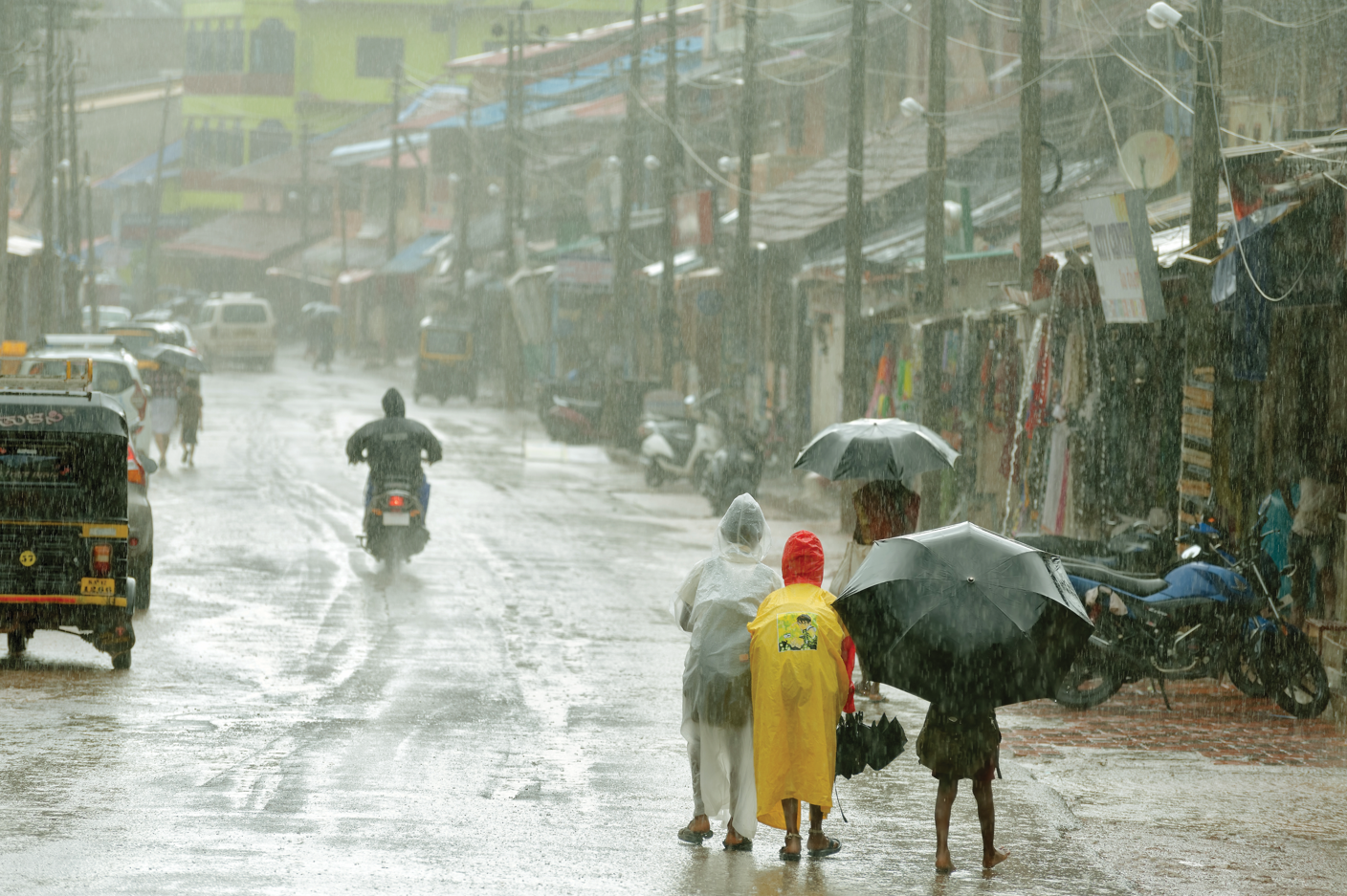
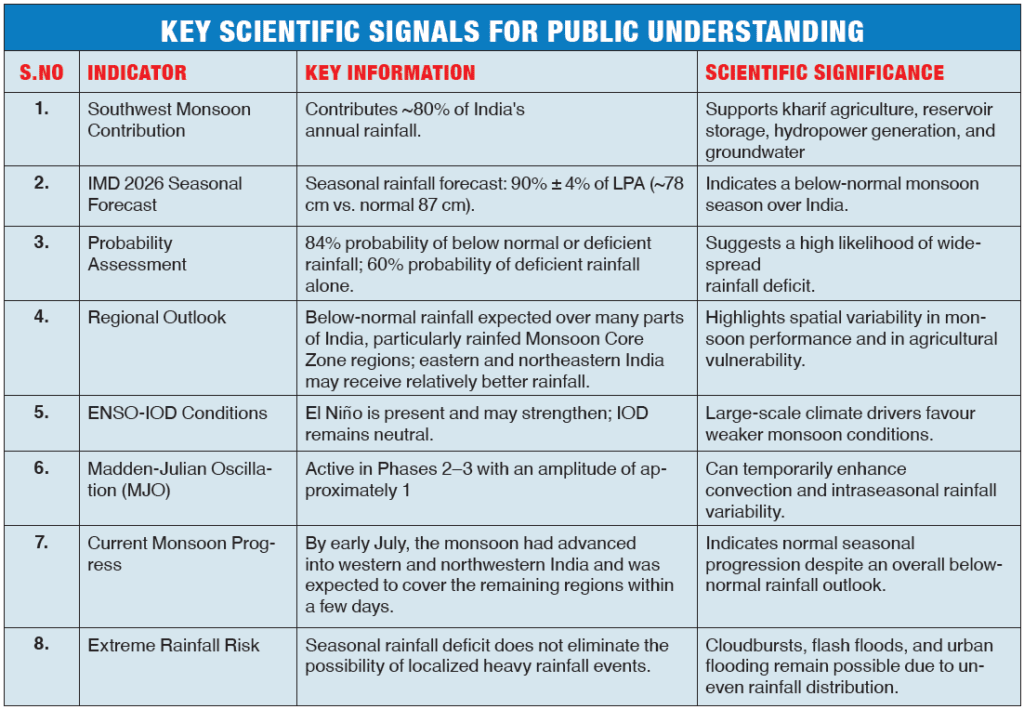
The southwest monsoon is a central component of India’s hydroclimate. Its onset, progression and seasonal distribution influence sowing decisions, soil-moisture availability, reservoir storage, groundwater recharge, hydropower generation and rural livelihoods. The June-September southwest monsoon contributes nearly 80% of India’s annual rainfall and supports the kharif cropping season. The October-December northeast monsoon is also important for Tamil Nadu, Rayalaseema, southern Andhra Pradesh and adjoining parts of southeast India.
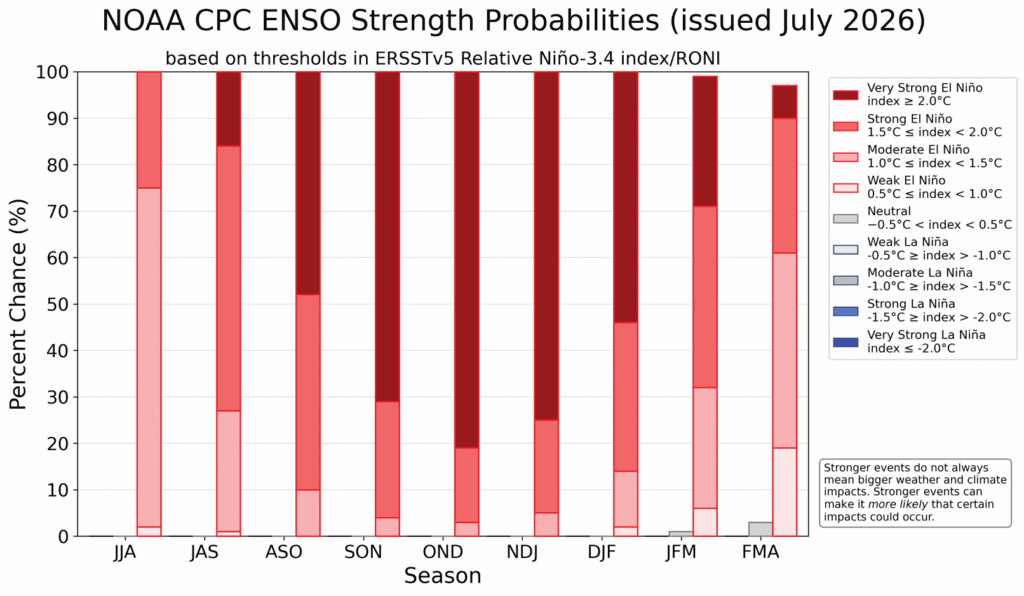
The 2026 monsoon requires close monitoring because the tropical Pacific has shifted toward El Nino conditions, and international ENSO outlooks indicate an elevated probability that these conditions may persist through the monsoon and post-monsoon seasons. Several historical El Nino years, including 1982, 1987, 1997, 2015 and 2023, were associated with weaker or spatially uneven rainfall over India. The scientific question is therefore not only whether El Nino develops, but how its timing and intensity interact with the Indian monsoon under a warming background climate.
AN AFFECTED MONSOON
IMD’s second-stage long-range forecast for the 2026 southwest monsoon indicates that June-September rainfall over India is likely to be about 90% of the Long Period Average (LPA), with a model error of +/-4%. Using the current all-India seasonal monsoon LPA of 87 cm, this implies an approximate seasonal total of 78 cm, or nearly 9 cm below the long-term average.
The associated probability distribution is scientifically important. IMD assigns a 60% probability to the deficient rainfall category and a 24% probability to the below-normal category, giving an 84% combined probability of below-normal or deficient all-India seasonal rainfall. The probability of normal rainfall is substantially lower at 14%, while the probabilities of above normal and excess rainfall are small. These probabilities support early preparedness, continuous monitoring and sector-specific planning.
Spatially, IMD indicates that below-normal seasonal rainfall is more likely over many parts of the country, including areas within the Monsoon Core Zone, where rainfed agriculture is widespread. Relatively better chances of normal to above-normal rainfall are indicated over parts of northwest and northeast India, eastern peninsular India, adjoining east-central India and isolated pockets of east India. Such regional contrasts mean that the all-India seasonal average can obscure both local drought risk and short-duration flood risk. El Nino is characterized by anomalous warming of the central and eastern equatorial Pacific Ocean and is often associated with a weaker Indian summer monsoon. However, this relationship is not linear or deterministic. Indian monsoon rainfall is modulated by interacting processes, including Indian Ocean sea-surface temperatures, the Indian Ocean Dipole (IOD), monsoon depressions, land-surface heating, Eurasian snow cover, the Madden-Julian Oscillation (MJO) and regional circulation anomalies. IMD currently indicates neutral IOD conditions over the Indian Ocean, with neutral conditions likely to continue during the monsoon season; therefore, a strong IOD-related offset to El Nino’s suppressing influence should not be assumed.
All Images Courtesy: Authors
The 2015 El Nino event provides useful context, but it should not be treated as a direct analogue for 2026. During 2015, Nino-3.4 warming peaked near +2.4 deg C in November 2015-January 2016, and India’s JJAS monsoon rainfall declined by about 12.7%. For 2026, the seasonal outlook indicates an approximate 10% deficit at the all-India scale. This similarity supports preparedness, but the realized outcome will depend on the timing of El Nino strengthening, intraseasonal monsoon activity, Bay of Bengal low-pressure systems and regional rainfall distribution. The principal risks include reduced seasonal rainfall, uneven distribution, extended dry spells and localized heavy rainfall events. Crop advisories, short-duration and drought-tolerant varieties, reservoir planning, groundwater conservation and district-level drought monitoring are therefore essential risk-reduction measures.
The 2026 southwest monsoon has so far evolved in a spatially uneven, pulse-like manner. IMD reported the onset over Kerala on 4 June 2026, three days later than the normal onset date of 1 June. During the early phase of June, all- India rainfall remained below normal, with larger deficits over parts of east, northeast and central India, while some areas of the southern peninsula received relatively better rainfall.
After the initial phase, the monsoon advanced in surges. By 9 July 2026, IMD reported that the southwest monsoon had covered the entire Indian subcontinent and large parts of country witnessed vigorous monsoon conditions in the past one week. During early July, monsoon activity increased under the influence of favorable synoptic systems, including a well-marked low-pressure area over northwest Madhya Pradesh and adjoining southwest Uttar Pradesh, a seasonal monsoon trough extending from northwest Rajasthan to northeast Bangladesh, an offshore trough from south Gujarat to central Kerala, a lower-to mid-tropospheric trough from the northeast Arabian Sea to Sikkim, a western disturbance over the western Himalayas and an upper-air cyclonic circulation over northeast Assam.
Early-season deficits should be monitored carefully, but they should not be interpreted as the final seasonal outcome. The southwest monsoon normally advances in pulses, and rainfall recovery during July remains possible if cross-equatorial flow, the monsoon trough, the low-level jet and Bay of Bengal low-pressure activity strengthen. July rainfall is particularly important for crop establishment, soil-moisture recharge and reservoir inflows.
CONCERNS WITH MONSOON 2026
The major risk in 2026 is not only the seasonal rainfall total, but also the timing, distribution and intensity of rainfall. Longer dry spells may be interrupted by short-duration, high-intensity rainfall events, increasing the risk of flash floods, urban flooding and crop stress even if seasonal totals partly recover. For Telangana, Rayalaseema and coastal Andhra Pradesh, rainfall distribution is especially important because sowing decisions, reservoir inflows, groundwater recharge and local water planning depend strongly on rainfall timing and continuity.
If El Nino persists into the post-monsoon season, the October-December northeast monsoon may become relatively more favourable over parts of southeast India, particularly Tamil Nadu, Rayalaseema and coastal Andhra Pradesh. Historical evidence suggests that some El Nino years have supported normal to above-normal northeast monsoon rainfall over southern peninsular India. This signal remains probabilistic rather than deterministic; realized rainfall will depend on Bay of Bengal low-pressure systems, depressions, cyclones and intraseasonal convective activity.
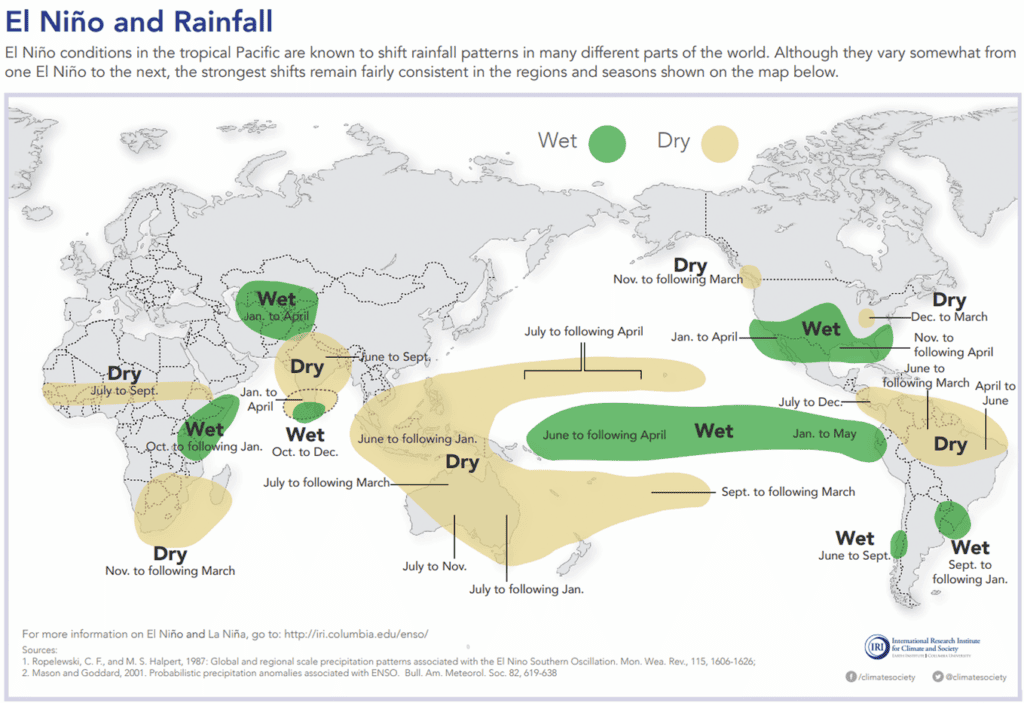
Across many meteorological subdivisions, southwest monsoon variability has direct implications for agriculture, water resources and disaster preparedness. A weak, delayed or uneven monsoon can affect sowing windows, reservoir inflows, groundwater recharge, hydropower generation and rural employment. Seasonal forecasts should therefore be translated into district-level advisories, crop-contingency plans, reservoir-operation decisions, drought monitoring protocols and water-management actions.
A further concern is that El Nino is developing within a warmer climate system. IMD assessments show a significant long-term warming trend over India, and 2024 was the warmest year over India since records began in 1901. A warmer atmosphere can hold more water vapour, increasing the potential for short-duration, high-intensity rainfall. Consequently, a below-normal seasonal monsoon can still produce damaging cloudbursts, flash floods and urban inundation.
The emerging risk is therefore not simply less rain or more rain. It is the co-occurrence of delayed onset, prolonged dry spells and sudden heavy downpours within the same season. The Indian monsoon will remain central to India’s water and food systems, but its variability may become harder to manage under continued warming. Climate-risk communication, early warning systems and local preparedness are therefore central to monsoon resilience.
Exposure is highest where rainfall variability intersects with high livelihood dependence and limited water security. Rainfed and drought-prone districts across central India, the Deccan Plateau, Telangana, Rayalaseema, interior Maharashtra, Karnataka, Madhya Pradesh, Chhattisgarh, Odisha and parts of eastern India are more vulnerable to delayed onset, prolonged dry spells and poor rainfall distribution. In these regions, even moderate seasonal deficit can disrupt sowing, crop establishment, fodder supply, groundwater recharge, reservoir inflows and rural employment.
Paddy, maize, pulses, oilseeds, cotton and millets are particularly sensitive when dry spells occur during germination, flowering or grain-filling stages. Livestock-dependent households may face additional stress through reduced pasture availability, fodder scarcity and pressure on local water sources. Thus, the risk is not only meteorological; it is also an agricultural and livelihood risk shaped by irrigation access, crop choice, soil moisture, groundwater availability and recovery capacity.
NEED FOR EARLY PLANNING
The response should begin before losses become visible. District-level advisories should integrate IMD forecasts, soil-moisture information, reservoir and groundwater status, crop calendars and field observations. Such integrated information can help identify exposed regions and guide timely support, including contingency seed kits, short-duration and drought-tolerant crop options, protective irrigation, fodder banks, livestock care and drinking-water planning.
For India, El Nino should be treated as an early planning signal rather than a cause for panic. Timely, location-specific action can reduce risks to crops, livestock, water resources and rural livelihoods during a highly variable monsoon year.
The 2026 monsoon illustrates the increasing complexity of India’s rainfall risks. A developing El Nino, a below-normal seasonal rainfall outlook, warming oceans and increasing rainfall extremes together point toward a more uncertain monsoon regime. Crop planning, reservoir operations, drought monitoring, groundwater conservation and district-level advisories should be strengthened before deficits translate into losses. In a warming world, India must prepare not only for weak monsoons, but also for delayed, uneven and extreme rainfall. Long-term monsoon resilience will depend on the coordination of science, governance, agriculture and local communities.
*Dr Koteswararao Kundeti is Senior Climate Analyst, National Center of Meteorology, Abu Dhabi, United Arab Emirates; Sripathi Gollapalli is a research scholar, Department of Earth and Atmospheric Sciences, NIT Rourkela, Odisha; and Dr Krishna Kishore Osuri is Associate Professor, Department of Earth and Atmospheric Sciences, NIT Rourkela, Odisha.